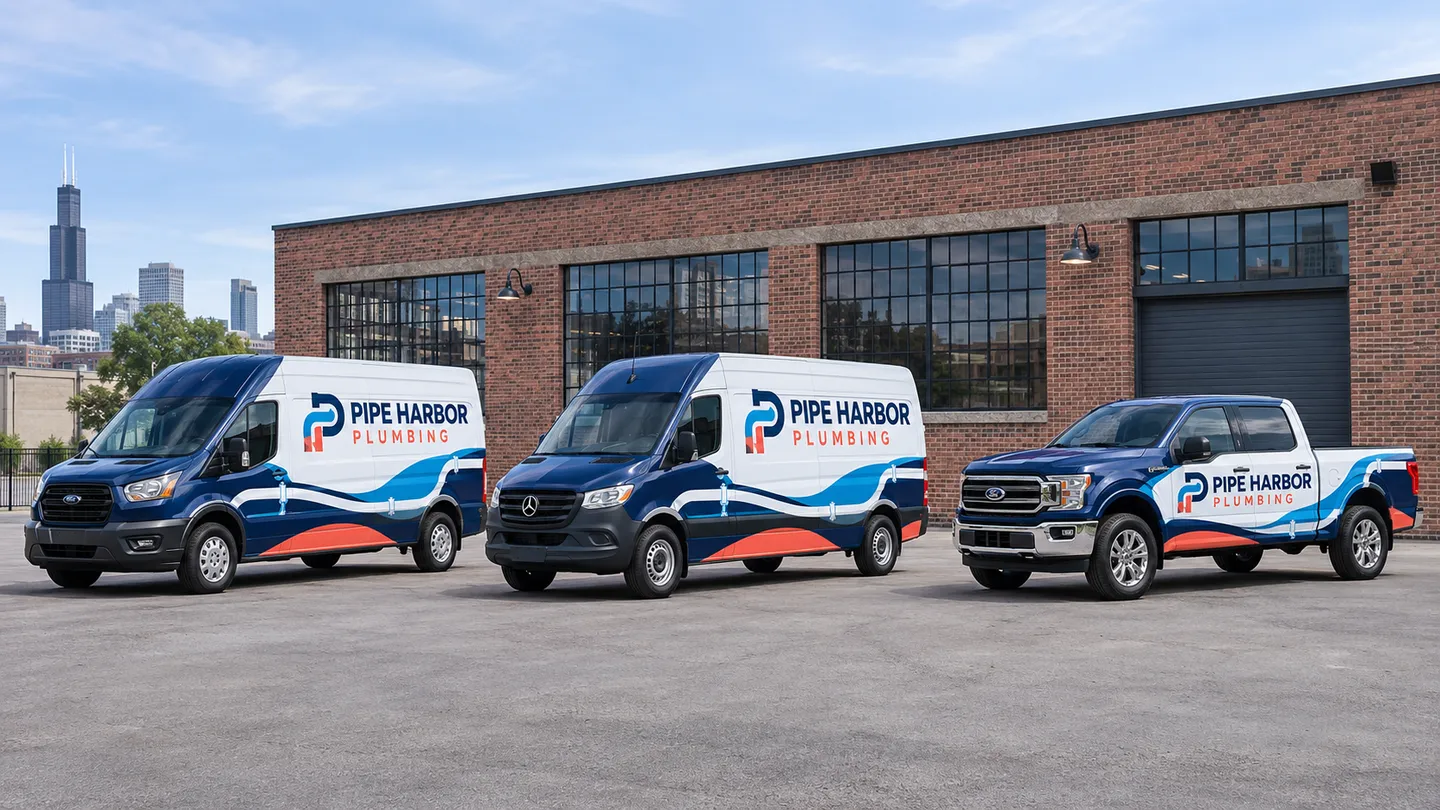
Write one communication goal
Decide what someone needs to understand about the business after seeing the vehicle. Name recognition, a service specialty and a contact route can compete for attention. State the priority before judging whether extra coverage adds useful clarity or merely fills more painted space.
Keep the exact wording and logo version fixed during the first comparison. If one option includes a new identity or extended design work, record that difference separately. Otherwise the budget may be comparing a branding project with a straightforward installation of existing artwork.
- Approve the primary message before coverage decisions.
- Use the same wording for the first comparison.
- Separate new brand development from vehicle layout work.
Compare actual surfaces
Ask for a coverage diagram for each option. Side panels, rear doors, bumpers and roof areas should not be inferred from a broad package name. Mark how vehicle paint remains visible and what happens at door seams, handles and accessories.
Review the side and rear as separate views. A larger side graphic can support a different hierarchy from lettering on rear doors. The useful question is which option communicates the approved message on this vehicle, not which mockup contains the largest colored area.
- Mark included and excluded surfaces explicitly.
- Show exposed paint as part of partial coverage.
- Review doors in the positions used during work.
Keep the purchasing assumptions comparable
Use the same paint-condition assumptions and installation arrangements for all options. Request the proposed film and protective construction where relevant, then use the current manufacturer documents to frame questions about the application. A familiar brand name does not make different scopes equivalent.
Enter the supplied option prices in separate budget scenarios and keep any unpriced items beside them. If an option requires removal or artwork adaptation that another excludes, obtain clarification before declaring a winner. The calculator organizes the comparison; it does not judge workmanship or future returns.
- Compare the same vehicle count and configurations.
- Record preparation and removal in each scenario.
- Save the reason for choosing the final coverage.
Keep a working record
Before you approve the next step
- Write one primary vehicle message.
- Use one current vehicle inventory.
- Request a coverage diagram for each option.
- Identify different artwork responsibilities.
- Record product and preparation assumptions.
- Keep the selected option with its accepted scope.
Use the free planning tool to organize the details you can confirm and the questions still open.
Four questions before the next step
Does full coverage automatically communicate more clearly?
No. Clarity depends on hierarchy, placement and the actual vehicle. Additional coverage can help a design, but it is not a substitute for deciding what the message should say.
Read the detailed guide: Compare lettering, partial graphics and full wraps fairly
Can the budget planner choose the best option?
It can show the totals produced by your own inputs. The purchasing decision still needs review of coverage, evidence, vehicle condition and the included work.
Read the detailed guide: Compare lettering, partial graphics and full wraps fairly
Is an average vehicle cost a supplier quote?
No. It is a calculation from your selected quantities and supplied prices. Shared charges can make the average different from the price of a single vehicle.
Read the detailed guide: Build a fleet wrap budget without hiding the unknowns
Should I enter zero for a cost that is not known?
Use the tool’s unpriced treatment and record the open question. Zero should not be interpreted as a supplier agreeing to perform that work free.
Read the detailed guide: Build a fleet wrap budget without hiding the unknowns
Original technical sources
Use the linked publisher's current instructions for the exact product and vehicle. This planning guide does not replace its application, safety or warranty requirements.