Group the vehicles
Separate actual body configurations and agreed coverage.
Planning example from Chicago Fleet Wraps
Connect the priced work with its assumptions before approving the total.
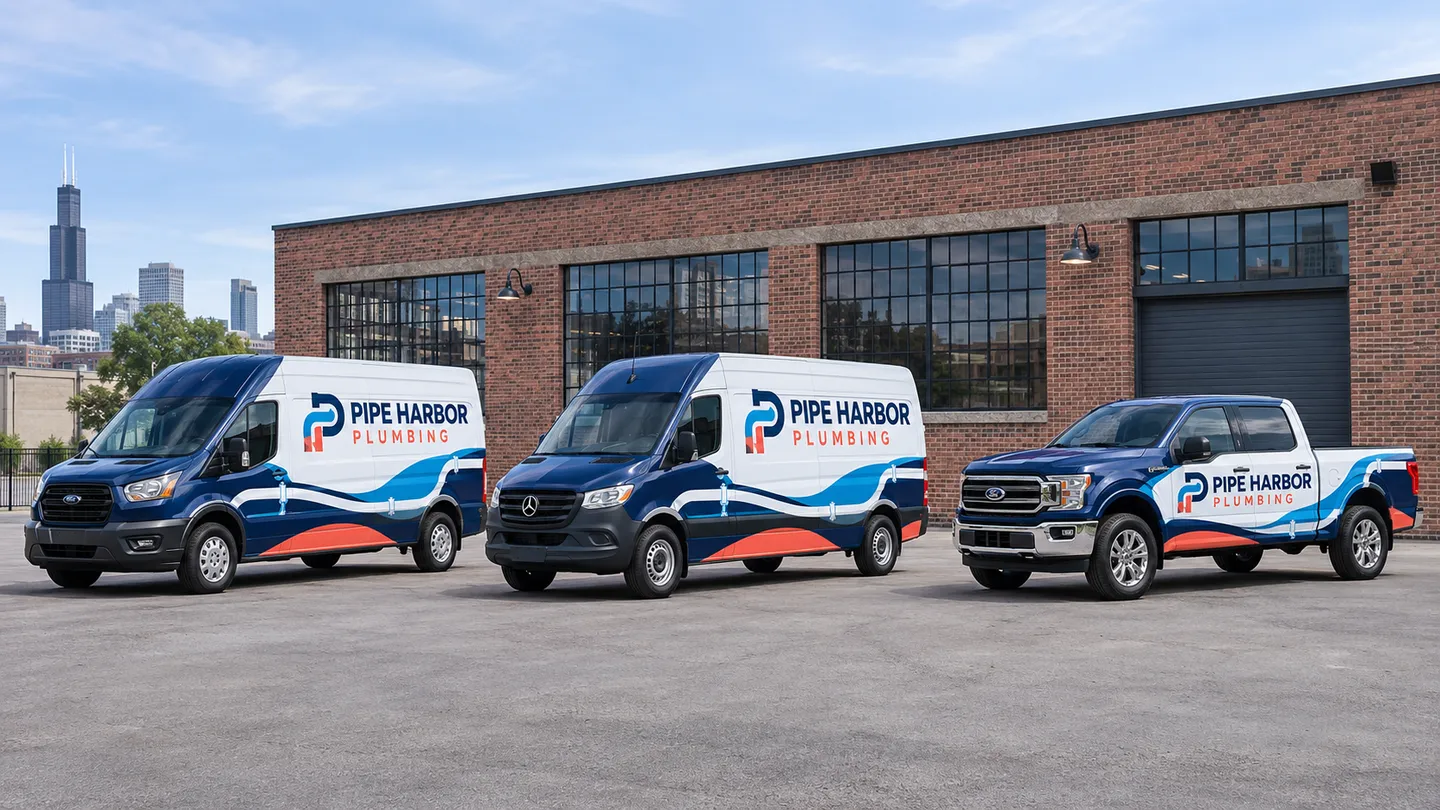
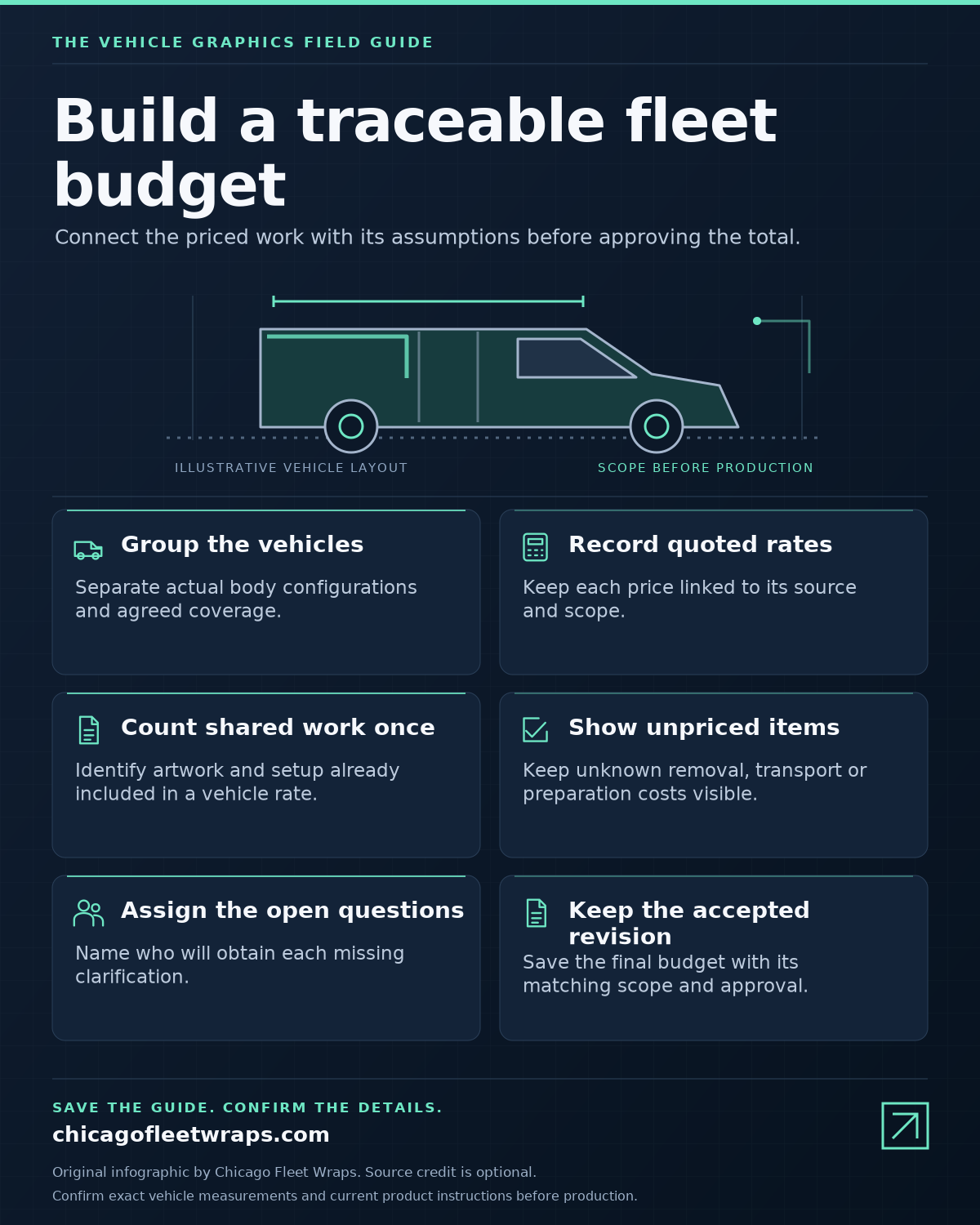
Original infographic from Chicago Fleet Wraps. You may reuse it; attribution is welcome and optional. Confirm project-specific dimensions, materials and instructions before using it for production.
The complete text
Separate actual body configurations and agreed coverage.
Keep each price linked to its source and scope.
Identify artwork and setup already included in a vehicle rate.
Keep unknown removal, transport or preparation costs visible.
Name who will obtain each missing clarification.
Save the final budget with its matching scope and approval.
Reference the original infographic on the matching Chicago Fleet Wraps page. The resource and CFW share an operator.
Adapt the caption to your article. Using the infographic does not require a backlink.
Practical guide
Separate vehicle groups, shared charges and unpriced work before comparing the total.
Read the guide: Build a fleet wrap budget without hiding the unknownsPractical guide
Keep the message and vehicle list fixed while reviewing the work included in each coverage option.
Read the guide: Compare lettering, partial graphics and full wraps fairlyPractical guide
Keep vehicle additions, artwork changes and condition surprises tied to an agreed revision.
Read the guide: Control wrap budget changes after the first approvalNo. It is a calculation from your selected quantities and supplied prices. Shared charges can make the average different from the price of a single vehicle.
Read the detailed guide: Build a fleet wrap budget without hiding the unknowns
No. Clarity depends on hierarchy, placement and the actual vehicle. Additional coverage can help a design, but it is not a substitute for deciding what the message should say.
Read the detailed guide: Compare lettering, partial graphics and full wraps fairly
Keep it as an accepted historical revision and create a current version. This makes scope changes and their approvals easier to understand later.
Read the detailed guide: Control wrap budget changes after the first approval
Use the tool’s unpriced treatment and record the open question. Zero should not be interpreted as a supplier agreeing to perform that work free.
Read the detailed guide: Build a fleet wrap budget without hiding the unknowns